In Part 1, we talked about dead space in worship. Those unplanned gaps between service elements that pull the congregation out of worship and into observation mode. We identified where dead space happens most and why it matters.
Now let’s talk about one of the simplest fixes I’ve found in over twenty years of leading and planning worship services.
What Is a Piano Underscore in Worship?
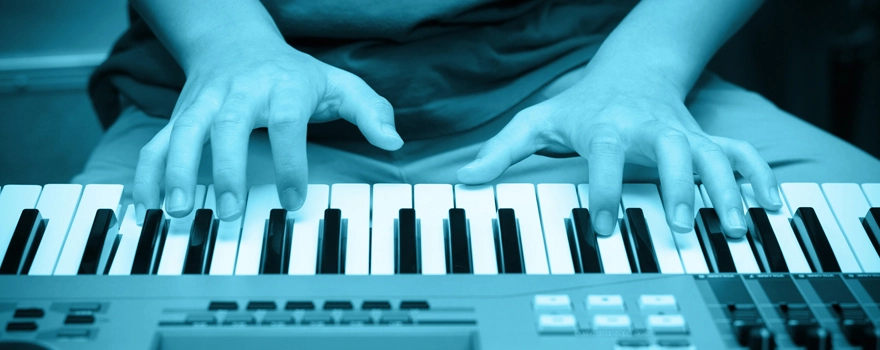
A piano underscore is simply soft, continuous music played underneath a non-musical service element:
- Prayer
- Scripture reading
- Announcements
- Pastoral moment
- Handoff between songs.
Think of it as a musical floor beneath the spoken word, like a film score during a dialogue scene. It tells the congregation “this moment is still part of worship” without competing for attention. When it’s working, nobody notices it!
Why a Piano Underscore Solves Most Dead Space Problems
Remember those awkward moments we identified in Part 1? The gap between songs, the pause before a prayer, the transition into announcements, the silence while the pastor walks to the platform.
A piano underscore addresses nearly all of them.
When a worship leader finishes a song and begins to pray, a soft piano part underneath keeps the musical thread alive. The congregation doesn’t mentally reset. They don’t start looking around. They stay in the moment because the music is telling them the moment isn’t over.
How to Use a Piano Underscore Under Prayers in Worship
This is probably the most common and most impactful use.
When your worship leader transitions from a song into prayer, the keyboard player simply continues playing softly underneath. You don’t need anything fancy. A few sustained chords in the key of the previous song (or the upcoming song) will do the job.
The underscore should not compete with the prayer. It’s not a time for the keyboard player to be clever. It should sit beneath the words, just loud enough to keep the emotional thread connected but quiet enough (and simple enough) to let the prayer be heard clearly.
One practical tip that can really change things: if the next song after the prayer is in a different key, the keyboard player can gently modulate during the prayer so the band is ready to go into the next song without any awkward silence or abrupt key change. The congregation will never notice the modulation happening. They’ll just notice that everything felt connected. (If your pianist isn’t comfortable improvising a modulation on the fly, the Modulation Engine at WorshipScores.com gives them a pre-written modulation in any major key combination they need.)
That one move alone can transform the way your worship set feels.
How to Use a Piano Underscore Under Scripture Readings and Announcements
Scripture readings in many churches feel like they’ve been dropped into the service from a completely different program. The band stops. The reader walks up. The passage appears on screen. The reader reads and walks away. Then the band starts again.
Now put a soft piano underscore beneath that same reading. Same Scripture, same reader, same words. But the passage feels intentional. It feels like an act of worship, not a program element. I’ve watched congregations respond to Scripture readings with noticeably more attentiveness when there’s a simple underscore beneath the words.
The same principle works around announcements. I’m not suggesting you underscore every announcement with dramatic piano music. But a brief four or eight bar piano transition into the announcement section (and back out of it) can prevent that jarring shift from “we were just worshiping God” to “now here’s some information.” This is especially helpful when announcements fall in the middle of a service rather than at the very beginning or end.
Practical Tips for Adding Piano Underscores to Your Worship Service
Here are a few things I’ve learned about making this work well.
1. Keep it simple. Sustained chords, gentle arpeggios and simple melodic lines work best. The underscore should support the moment, not steal attention from it. If people are noticing the piano, it’s too busy. And if your pianist reads music well but isn’t comfortable improvising, written underscores (like the ones I created here at Worshipscores.com) can give them something concrete to play while they build that confidence over time.
2. Match the emotional temperature. If the prayer is reflective, the underscore should be reflective. If the Scripture reading is triumphant, the underscore can carry a little more energy. The music should match what’s happening in the room.
3. Plan ahead and communicate. If your worship leader is going to pray between two songs in different keys, the keyboard player needs to know both keys before Sunday. Write it on the chart and talk about it at rehearsal. Make sure the keyboard player knows when the prayer or reading is ending so they can transition naturally into the next song. A simple hand signal or eye contact is all it takes. A ten second conversation on Wednesday can save an awkward ten seconds on Sunday.
4. Rehearse the transitions, not just the songs. Most worship bands rehearse their songs and call it a day. Try running through the entire service flow at least once, including the spoken elements. Even a quick walk-through of “I’ll pray here, you keep playing, then we’ll go into the next song” can make a noticeable difference on Sunday morning.
Try It This Week
The goal here is not to have music playing at every second of the service. Intentional silence is still a powerful tool (we covered that in Part 1). The goal is to stop leaving transitions to chance.
Pick the transition that feels the most awkward in your current service (for most churches, it’s the gap between the last worship song and the prayer or Scripture reading) and have your keyboard player simply keep playing softly through that moment. One transition, one Sunday. See what happens!
Bottom Line: A simple piano underscore can eliminate most of the awkward dead space in your worship service, and you can start this week with just one prayer, one Scripture reading, or one transition between songs.

Don Chapman is an arranger, composer and worship leader with over 20 years of experience creating resources for the local church. He created Worshipscores.com to provide keyboard underscores that help worship leaders create smooth, natural transitions throughout their worship sets.