The worship set was solid: good songs, good keys, good band. The worship leader had clearly put real thought into the song selection. But between the second and third songs, everything just stopped. The guitarist was changing his capo. The worship leader glanced toward the pastor. The pastor was still walking to the platform. The Scripture reader was looking for the right mic.
Nobody made a mistake, but the room changed. People who had been fully engaged thirty seconds earlier were now looking around, slight sense of unease. The emotional thread of the service had been dropped.
That moment lasted maybe ten seconds. But it was enough.
What Dead Space in Worship Actually Is
Dead space is not silence. Silence can be one of the most powerful tools in a worship service. Dead space is something entirely different.
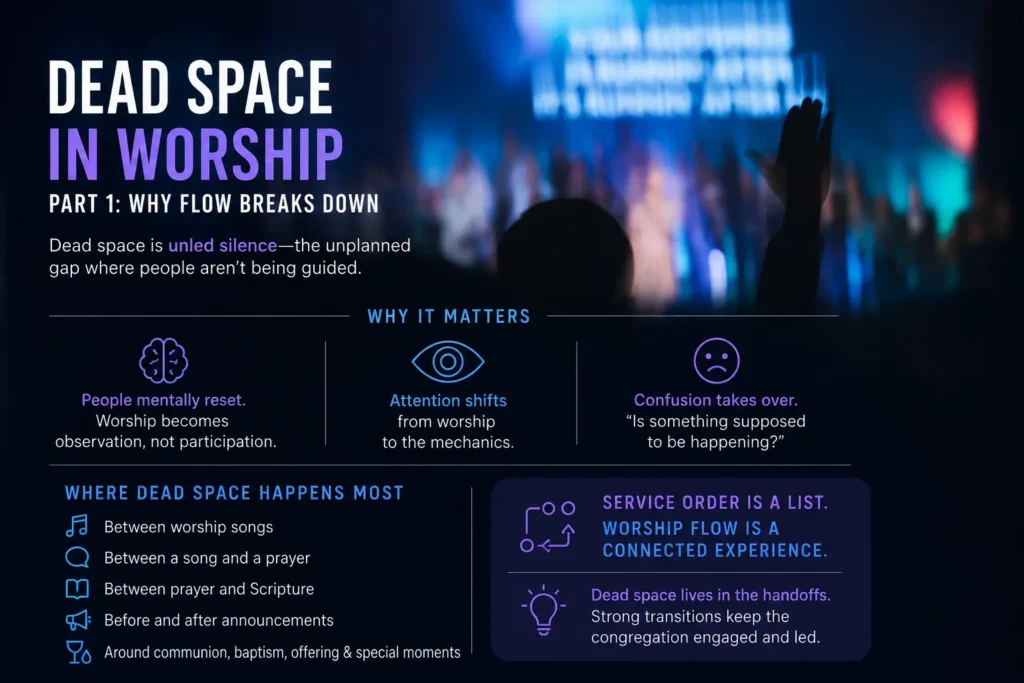
Dead space is unled silence. It’s the unplanned, unframed gap between two service elements where the congregation simply isn’t being guided.
It can happen when one song ends and the next song isn’t ready. It can happen when the worship leader finishes praying and nobody knows what’s next. It can happen when a video fades to black and the room just sits there. It can happen when the band stops playing before the pastor is in position.
Intentional silence feels led. Dead space feels accidental. Intentional silence invites reflection. Dead space creates confusion. One says “let us wait before the Lord.” The other says “is something supposed to be happening right now?”
That’s a big difference!
Why Awkward Worship Transitions Matter More Than You Think
Most worship leaders spend hours selecting the right songs, the right keys, the right arrangements. And they should. But very few spend any time at all planning what happens between those songs.
Here’s why that matters.
Dead air makes the congregation mentally reset. Worship is experienced as a connected flow. When the congregation moves from praise to prayer to Scripture to song, they’re being spiritually led through one experience. But when a transition feels awkward, they stop participating and start observing. It’s like watching a movie where the screen goes black for five seconds between every scene. You can still follow the story, but you keep getting reminded you’re watching a production.
Who’s walking up next? Why did the keyboard player stop? Is the guitarist changing a capo? Is this silence intentional or did someone forget something? The issue isn’t that people are being critical. The issue is that their attention has shifted from worship to mechanics. Awkward dead space turns worshipers into spectators, even if only for a few seconds.
Most churches don’t need more elements in their service. They need stronger connections between the elements they already have.
Where Dead Space Happens Most Often in a Worship Service
Once you start looking for dead space, you’ll notice it everywhere. Here are the most common places.
- Between worship songs. This is the obvious one. The next song is in a different key. The band is waiting for a click track. The guitarist is swapping capos. The keyboard player is changing patches. The worship leader isn’t sure whether to speak or stay quiet. The last chord fades and there’s nothing to fill the gap.
- Between a song and a prayer. A worship leader finishes a song and immediately feels pressure to begin praying because the room has gone quiet. Instead of letting the moment breathe, the leader starts filling space with words. The prayer feels rushed (and the congregation can tell).
- Between prayer and Scripture. The worship leader prays. The reader walks up. The Bible passage appears late on the screen. The room waits. A Scripture reading should never feel like an item being inserted into the service. It should feel like the Word of God being received by the people of God.
- Before and after announcements. Announcements can break worship flow when they begin too abruptly, follow a deeply emotional song, or feel completely disconnected from the spiritual purpose of the service.
- Around communion, baptism, offering and special moments. These often need more emotional support than a normal transition. They involve movement, silence, instructions, prayer and waiting. Without a plan, they feel clunky. With a plan, they can become some of the most meaningful moments in the service.
The Difference Between a Service Order and Worship Flow
A service order tells you what happens. Song, welcome, song, song, prayer, Scripture, sermon, response song, announcements, offering, closing song. That’s a list.
Worship flow asks a different question. Not “what comes next?” but “how does this moment lead into the next?” How does the worship set lead into prayer? How does the prayer prepare people for Scripture? How does the Scripture prepare people for the sermon? How do announcements avoid feeling like a commercial break?
A service order is a list. Worship flow is a connected experience.
And here’s what most worship leaders miss: dead space almost always lives in the handoffs. The problem isn’t the song, the problem is the handoff after the song. The problem isn’t the prayer, the problem is the handoff into the prayer. The problem isn’t the announcement, the problem is the handoff into the announcement.
How to Diagnose Dead Space in Your Own Worship Service
This week, try this. Watch a recording of your service and ignore the music quality. Instead, watch the transitions. When did the room feel focused? When did it feel uncertain? When did silence feel holy? When did it feel awkward? When did the service feel like it stopped and restarted?
Then print out your order of service and circle every handoff. Every moment where leadership shifts from one element to another. Band to worship leader. Worship leader to pastor. Pastor to Scripture reader. Sermon to response song. Announcements to offering.
For each handoff, ask yourself what the congregation actually needs in that moment. Do they need to keep singing? Do they need to listen? Do they need a moment of quiet? Do they need energy? Do they need calm? Do they need a musical bridge to carry them from one moment to the next?
That last question is the big one. And it leads directly into Part 2 (coming soon!)
When Intentional Silence Is the Right Choice
I don’t want to give the impression that every gap needs to be filled with sound. That’s not the point at all.
Intentional silence can be deeply powerful. After a confession prompt. After a Scripture reading. During communion. After a sermon invitation. These are moments where quiet allows the Lord to speak.
But silence needs to be framed. “Let’s take a moment of silence to confess before the Lord.” “Before we sing, let’s sit with that passage for a moment.” “We’ll spend the next thirty seconds in quiet prayer.” When the congregation knows why the room is quiet, silence deepens worship.
When they don’t know why, it becomes awkward. Fast.
The problem is never quiet. The problem is confusion.
Plan the Spaces Between the Songs
Here’s the big idea. Most worship leaders plan their songs, keys, arrangements, click tracks, Scripture passages and prayer moments with real care. Then they leave the transitions to chance.
Don’t only plan the worship set. Plan the worship flow.
Instead of asking “what songs are we doing this week?” start asking “how will each moment lead naturally into the next?”
The goal is not slick production. The goal is removing unnecessary distractions so the congregation can stay engaged with the Lord. A smooth transition isn’t about impressing people. It’s about serving them.
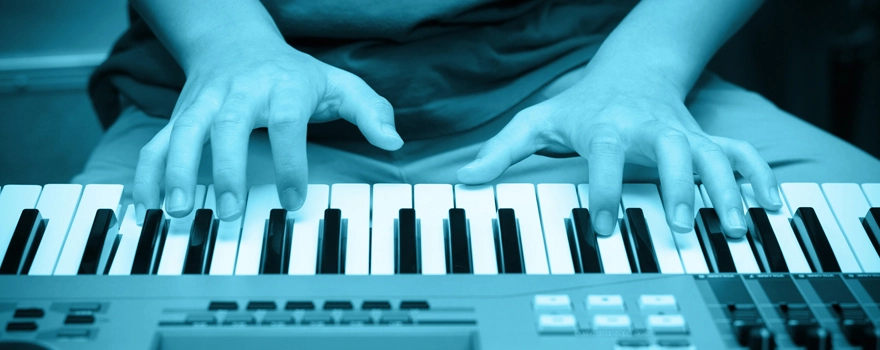
In Part 2, we’ll look at one of the simplest and most effective tools for holding those in-between moments together: a soft piano underscore. It’s easier than you think, and it can begin transforming your worship service this Sunday.
Bottom Line: Dead space in worship is rarely dramatic, but it quietly pulls attention from worship to logistics, and this week you can start fixing it by watching a recording of your service, circling every handoff and planning the spaces between the songs.
Photo credit: Unsplash, Terren Hurst.

Don Chapman is an arranger, composer and worship leader with over 20 years of experience creating resources for the local church. He created Worshipscores.com to provide keyboard underscores that help worship leaders create smooth, natural transitions throughout their worship sets.